A LEGACY OF PRIDE: HARLEM SCHOOL OF THE ARTS
Roles: Reporter, Writer, Photographer
Format: Feature Article
Publication: Harlem View
Date: May 24, 2022
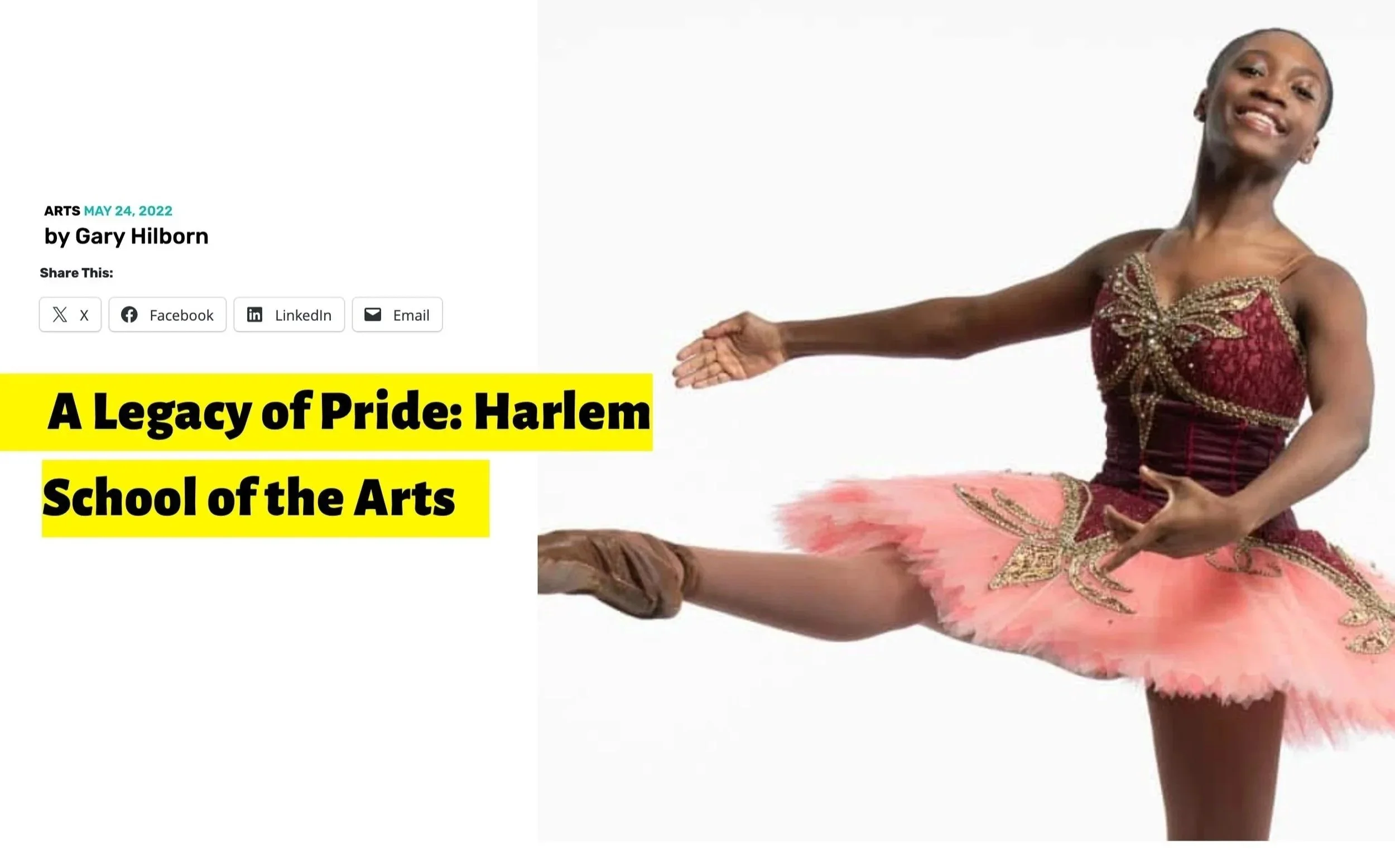
CLICK IMAGE TO VISIT ARTICLE ON THE WEB
The Story
A reported feature on the Harlem School of the Arts and its Renaissance Project renovation, funded by legendary trumpeter and philanthropist Herb Alpert. The story examines the institution's 60-year mission to provide world-class arts training to underserved communities in Central Harlem.
The Reporting
The assignment required on-the-ground reporting in Harlem, conducting interviews with school leadership, faculty, students, and community stakeholders. I researched the school's history, Herb Alpert's philanthropic involvement, and the broader context of arts education access in public schools. The final piece weaves personal narrative with institutional history, using the renovation as a lens to explore the school's cultural impact and significance.
Why It Matters
The story brings visibility to an underrecognized institution doing critical work in a neighborhood often defined by headlines rather than the human stories within it. It demonstrates the ability to report complex stories involving education, philanthropy, community, and cultural preservation, while centering the voices and experiences of the people most affected by the institution's work.
LGBTQ ELDERS
Role: Journalist & Producer
Format: News Package
Publication: Harlem View
Date: December 13, 2022
Additional Roles: Videographer, Field Mixer, Editor
2022 Mark of Excellence
Feature Videography
SPJ Region 1 Winner
The Story
LGBTQ Elders is a news package reported for Harlem View that examines the unique challenges facing older members of the LGBTQ+ community and the Harlem-based organization working to meet them where they are. Sage Center Harlem, a nonprofit located on West 143rd Street, provides food, education, socialization, and mental health services to LGBTQ+ adults 60 and over, with age restrictions waived for those living with HIV.
The Challenge
With 2.5 million LGBTQ+ Americans over 60 today, a figure projected to reach 7 million by 2030, the need for culturally competent elder care is growing rapidly. Many of these individuals came of age when being LGBTQ+ carried serious social and professional consequences, and most live alone. In Harlem, where the population is predominantly Black and brown, that isolation is compounded by community conservatism that can make it harder to seek help openly. The story required earning the trust of participants willing to speak candidly about vulnerability, identity, and belonging on camera.
The Reporting
Filmed on location at Sage Center Harlem, the package combined verité footage of the center's daily programming with intimate on-camera interviews with participants Calvin Cleveland and Gay-Le Pratt, alongside staff perspective on the community they serve. As the sole journalist on the ground, I handled all aspects of field production—reporting, shooting, sound mixing, and editing—to produce a tightly crafted two-minute package that balanced data-driven context with deeply human storytelling.
The Impact
The package was published by Harlem View and recognized by the Society of Professional Journalists with a 2022 Mark of Excellence Award for Feature Videography, winning Region 1—the organization's highest regional honor. The story brought visibility to an underserved population at the intersection of age, sexual identity, and race, and highlighted a resource many in the surrounding community may not have known existed.
Why It Matters
LGBTQ+ elders are among the most isolated people in America, and their stories are rarely told with the specificity they deserve. Reporting this piece in Harlem, a neighborhood with its own complex relationship to Queer identity, felt urgent. It's the kind of local journalism that doesn't get made unless someone shows up with a camera and stays long enough to listen.

“Blue Souls, Red States grew out of a simple question. What does politics actually look like where people live?
This project is about listening inside communities that are usually reduced to headlines, polling, or talking points. I am reporting from the local level, speaking directly with voters, candidates, and neighbors about how politics intersects with family, faith, work, and identity. The goal is not persuasion. The goal is understanding.”
Gary Hilborn
President, Due South Media
BLUE SOULS
RED STATES
PROJECT OVERVIEW & CONTRIBUTIONS
Format: Podcast & Documentary Series
Roles: Reporter, Producer, Host
Project Status: In development and early reporting for mid 2026 launch
Blue Souls, Red States is a multi-platform documentary project examining local and midterm elections in Republican-held districts ahead of the 2026 cycle. The project centers on voters, candidates, and community members navigating political division at the local level, with an emphasis on listening, context, and lived experience rather than punditry.
I am developing the project from the ground up, leading reporting, editorial direction, and production across audio, video, and written formats.
Editorial Direction & Reporting
Reporting on contested and closely watched local races in Republican-held districts
Conducting long-form interviews with voters, candidates, organizers, and community members
Shaping an editorial approach grounded in journalism, ethics, and non-advocacy reporting
Prioritizing firsthand accounts over commentary or political analysis
Podcast & Audio Development
Developing a narrative podcast series built from field interviews and reported audio
Designing episode structure, pacing, and tone for clarity and accessibility
Preparing production workflows for remote and on-location recording
Planning public distribution on major podcast platforms
Video & Written Storytelling
Developing short documentary video pieces for digital release
Producing written essays and reported features to accompany audio and video work
Creating modular stories that can stand alone while contributing to a larger body of reporting
Distribution & Public Access
Planned release across podcast platforms, digital video channels, and the project website
Public-facing work designed for audiences, educators, journalists, and civic organizations
Long-term goal of building an accessible archive of local political stories
Impact
Blue Souls, Red States documents political life at the ground level, where outcomes are close and consequences are personal. The project creates space for people to explain how politics intersects with family, faith, work, and identity, offering a deeper understanding of how democracy functions inside divided communities.
Let’s Work Together
Email: gary@duesouthmedia.co
Phone: +1 347.693.4121
LinkedIn: linkedin.com/in/garyhilborn